
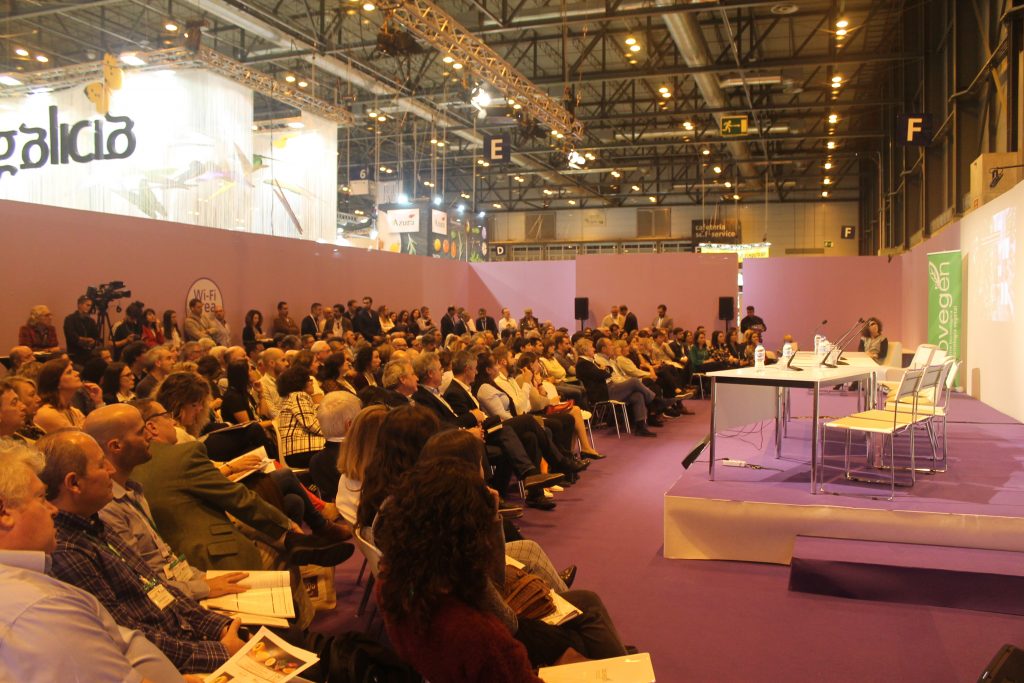
The BIOVEGEN “Technology Attraction” colloquium brings together more than 250 attendees

- More than 250 researchers, companies and operators in the fruit and vegetable sector participated in the colloquium, organized by BIOVEGEN.
- The experts analyzed the technological trends destined to lead a new technological revolution in the world of Spanish agriculture and warned against legislative decisions not based on scientific evidence.
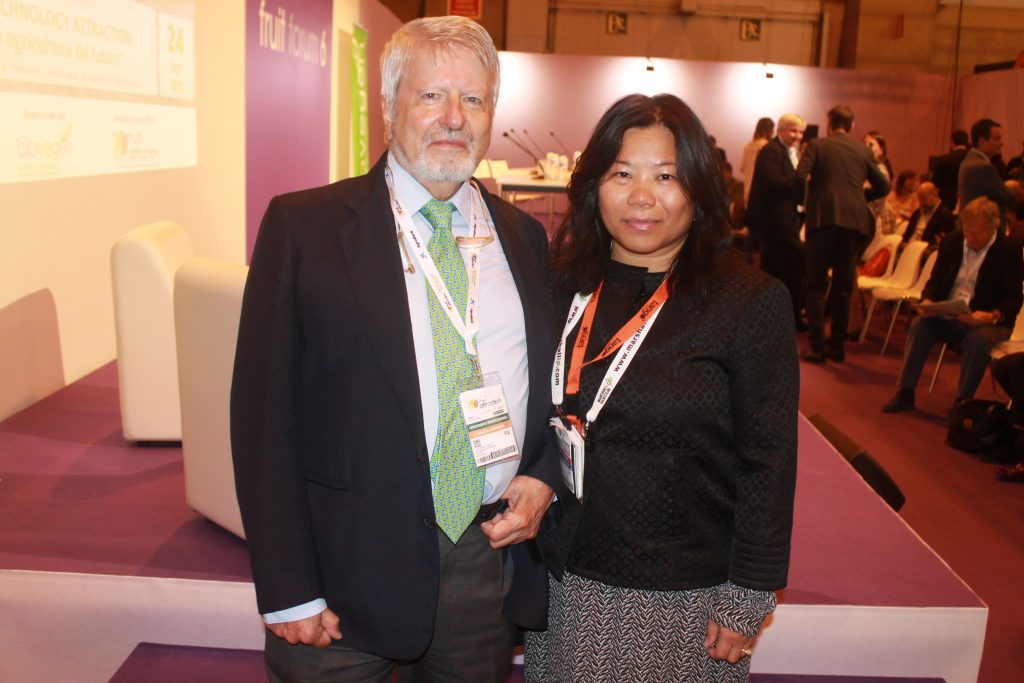
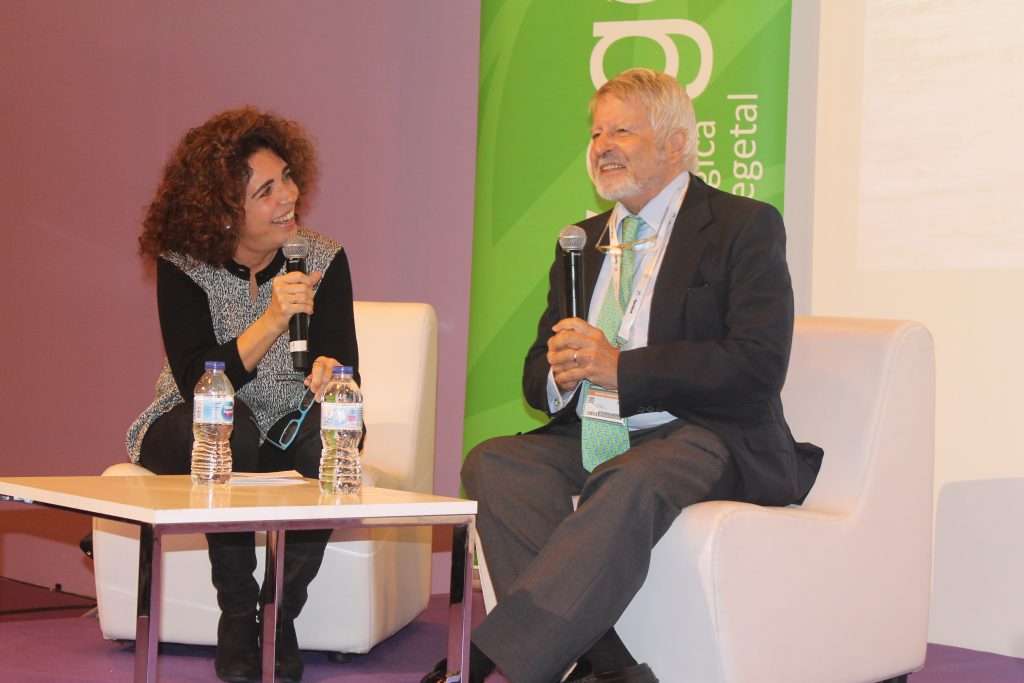
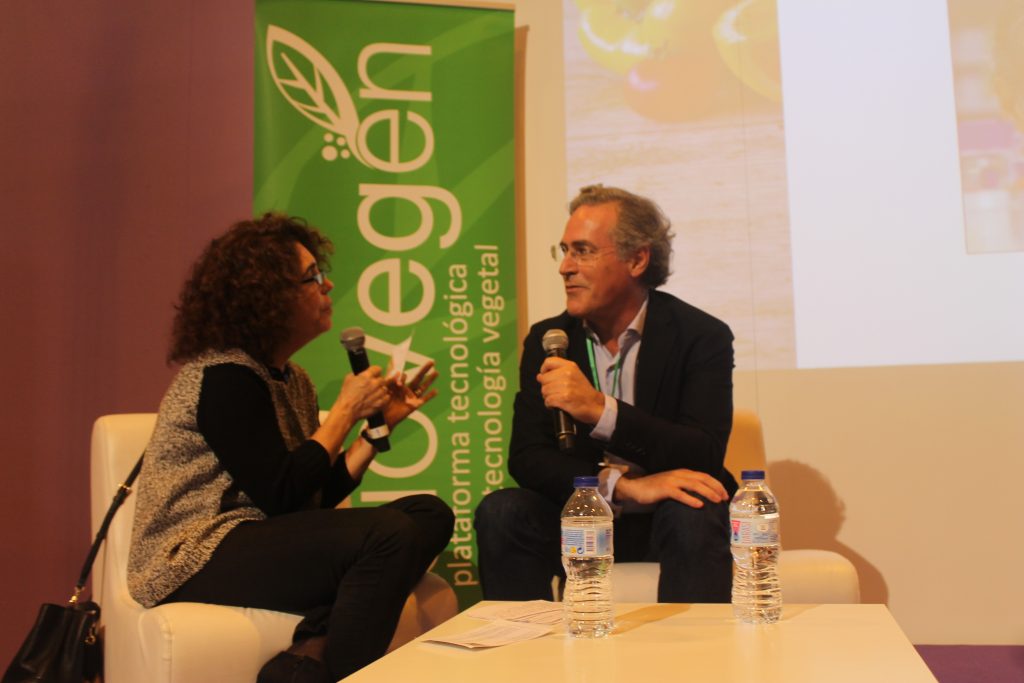
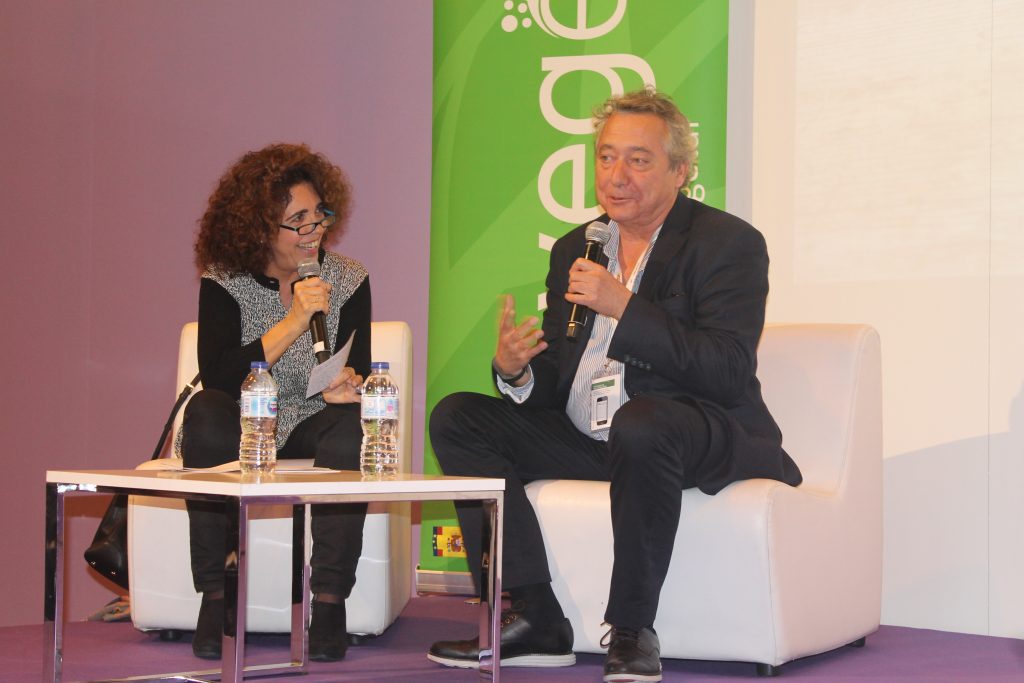
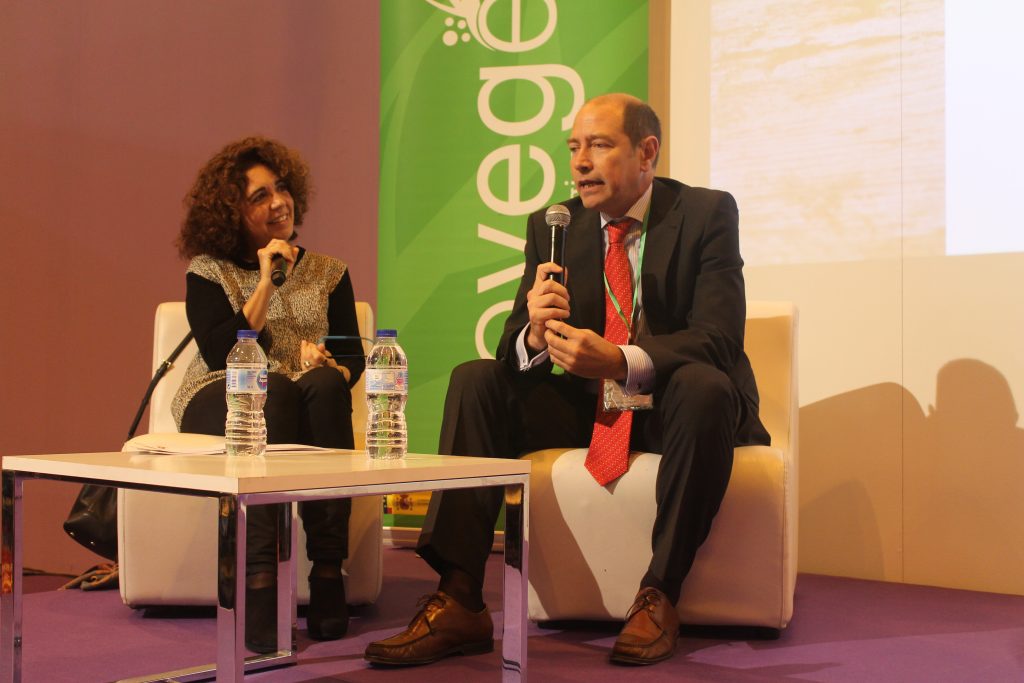
«TECHNOLOGY ATTRACTION: the agriculture of the future» was the title of the BIOVEGEN Colloquium held on October 24, 2018 and conducted in a dramatized manner by the Malaga actress, María Segalerva, in which prestigious researchers and businessmen participated who contributed their particular visions on the lines of work that they are called to lead. a new technological revolution in the world of Spanish agriculture:
- The other uses of microorganisms, aquatic plants and the new era that is coming of agrobiological products as substitutes for chemistry.
- The revaluation of waste, once polluting and now nutrient-dense.
- The role of big data and the internet of things in precision agriculture.
- Artificial intelligence and yields and pests, robotics.
- The potential of genome editing as a driver of a new generation of crops with improved characteristics.
- Intensive agriculture in the fruit and vegetable sector.

The event took place at Fruit Forum 6 during the FRUIT ATTRACTION 2018 International Fair and It was attended by 250 attendees including researchers, representatives of agri-food companies and operators in the fruit and vegetable sector. The colloquium served forum for debate and discussion of key technological issues for the future of agriculture and how to facilitate its implementation in the Spanish agricultural sector, to stimulate the interest of the private sector in investing in R&D.

Conclusions
The Conference emphasized that the ruling of the Court of Justice of the European Union (CJEU) released in July It will not prevent CRISPR-edited plants from reaching the EU, but they will all be imported. All the experts who participated in the colloquium considered the resolution as “a serious step backwards”, emphasizing that “in the end it will be the consumers themselves who will demand explanations as to why this brake is being imposed on agricultural research in Europe”.
The important advances in systems biology and genomics that are taking place when it comes to "knowing and controlling the mechanisms that regulate the development of plant production" were also highlighted. The identification of microbiota was pointed out to improve the uptake of nutrients by plant roots – which will allow reducing fertilization with nitrates or phosphorus – or the activation of immunization systems, which induce plants to recognize pathogen molecules to trigger thus their natural defense mechanisms – which will minimize the use of phytosanitary products. Genetic improvement is enabling the expansion of “precision agriculture, which minimizes the use of fertilizers, herbicides or insecticides” by reducing their polluting effects on the soil or residue problems in fruits and vegetables. In this sense, the R&D of Spanish companies is well placed to develop a new era of agrobiological products that replace chemical pesticides, non-polluting fertilizers or aquatic plants.
Artificial intelligence applied to agriculture was also the protagonist, who transferred the experiences of companies from big data applied to crop planning and precision agriculture. The latest agronomic trends were also analyzed, such as hyper-intensive agriculture and integrated pest control.
The day concluded with a round table where the role of the company as an engine of innovation was highlighted given that “the company accelerates the development of research because it seeks solutions to real problems, not generating knowledge, which usually has no deadlines or rush. ”, and as a developer of knowledge arising from research centers (“We do not do science, we dedicate ourselves to finishing the proof of concept, to validating that what we are working on as a product really has a market niche”).
The Conference called for the implementation of regulatory frameworks based on scientific and business criteria and not political criteria, in addition to requesting greater support for facilitating structures and Science-Business connection. In this sense, BIOVEGEN presented the expanded version of its document “Analysis of the agri-food sector and proposals for improvement in R&D&I”, with the aim of facilitating the generation of projects and technological development based on public-private cooperation.
Gallery









Summary video


Program of the day
12:00 p.m. BIOVEGEN Colloquium: “TECHNOLOGY ATTRACTION: the agriculture of the future”
Moderator: Maria Segalerva. Actress and presenter
They intervene:
- José Ignacio Cubero. Emeritus Professor – University of Córdoba
- Pablo Vera. Director – Institute of Plant Molecular and Cellular Biology (UPV-CSIC)
- Antonio Molina. Director – Center for Plant Biotechnology and Genomics (CBGP)
- Antonio Leyva. Principal Investigator – National Center of Biotechnology (CNB-CSIC)
- Xana Belastegui.Chief Business Officer – IDEN BIOTECHNOLOGY
- Ricardo Arjona. Director – EC2CE
- Angel of the Pine Director of the production and development department – ANECOOP
Open and interactive debate
1:45 p.m. BIOVEGEN 2.0 vision document
Gonzaga Ruiz de Gauna. BIOVEGEN Coordinator
2:00 p.m. Conclusions and cocktail
 English
  Spanish