
BIOVEGEN and CBGP confirm the “immense potential” to turn their work with NGTs into patents in 'bio' fertilizers and stimulants‘

- The Centre for Plant Biotechnology and Genomics (CBGP) in Madrid is recognized as a 'Severo Ochoa' center for its excellence in agricultural biotechnology, with nearly 300 employees and 40 research groups, and has created an innovation ecosystem around its research with spin-offs such as Discovery Channel or a permanent unit with multinationals like Rovensa
- BIOVEGEN, the Biotechnology Platform dedicated to uniting science and business, fills the center's auditorium with more than 120 researchers and agricultural entrepreneurs to disseminate their main work in anticipation of the imminent push of new European regulations in this area.
- Fungi that help tomatoes tolerate abiotic stress or reduce mycotoxins in corn; bacteria that improve the microbiome or strengthen roots; viruses that reduce fungal virulence; and improved varieties using CRISPR… these are some of the lines of research generating patents and new companies.
“The biotechnology revolution is about to arrive in Europe, but it is imminent, and Spain, with centers like the CBGP, has immense potential to transform basic research into patents, new developments, and licenses exploited by a sector destined to make agriculture more competitive and which is already an emerging reality.” This was the statement made by José Pellicer, president of BIOVEGEN, the platform dedicated to translating biotechnology into agricultural developments, during the opening of the conference 'Cutting-edge Science and Innovation for Sustainable Agriculture.' The event, held last week, filled the auditorium of this center, located in the Science and Technology Park of the Polytechnic University of Madrid, with over 120 researchers and businesspeople in attendance. As its director, Isabel Allona, described it, with an annual investment of €14 million, nearly 300 employees, and 40 research groups, the CBGP has twice renewed one of the most prestigious distinctions in the Spanish scientific system—the Severo Ochoa Award—granted to centers that demonstrate exceptional impact in their field—plant biotechnology—which also guarantees specific medium-term funding. The joint center, created in 2010 by the UPM and linked to the INIA/CSIC National Center, presented its technology transfer program—CBGP-Solutions—during this event. This program collaborates with agricultural biotechnology companies either through specific services—such as those offered by Rocinante Lab, dedicated to developing genomic methods to accelerate breeding (from the current 13-15 years to 7 years)—or through... spin-offs such as Nawter Discovery or through permanent research units in partnership with world-leading biosolutions companies such as Rovensa.
This explosion of new substances, microorganisms, and 'bio' methods—and their use as fertilizers, stimulants, or for improving plant health—as well as new gene-editing techniques (NGTs), is poised to consolidate, further strengthened by the regulatory changes the EU is preparing. Therefore, BIOVEGEN is working on a series of meetings, workshops, and conferences to bring these new developments and innovations closer to its more than 185 members and the primary sector in general. The biotechnology platform, whose activities are supported by the Ministry of Science, Innovation and Universities, aims to disseminate and connect the advances and developments of its members, which include research centers, agribio companies, investment funds, and banks. It also seeks to highlight the activities of those dedicated to project funding, such as the CDTI (Center for Technological Development and Innovation) and the AEI (State Research Agency), which, in fact, also participated in this event.
Indeed, the immediate horizon shows the approval of new, more open and flexible European regulations for plants obtained through gene editing and CRISPR (NGTs). But the reform of the fertilizer regulation is also well underway—it should facilitate the recognition of and access to new biofertilizers and bionutrition products—as is the Omnibus package for simplifying food legislation, which will broaden the definition of biostimulants to differentiate them from plant protection products (chemicals) and accelerate the registration of biopesticides (biocontrol in plant health), as well as legislation on plant reproductive material (from nurseries). Furthermore, according to information obtained by BIOVEGEN—which is participating in the ongoing consultations—the EU is already working on a new Directive on Genetically Modified Microorganisms.
This explains initiatives—also presented during the event—such as Ivoro Ventures, dedicated “to collaborating with and advising research centers to transform their advances into businesses, in spin-offs either start ups”, as its CEO, Pedro Álvarez, pointed out; or, once launched, to transform these small emerging biotech companies “into solid, scalable and successful companies”, by participating in their equity or helping in their internationalization, as later detailed by the partner of Swanlaab Venture Factory, Claudia Jiménez.
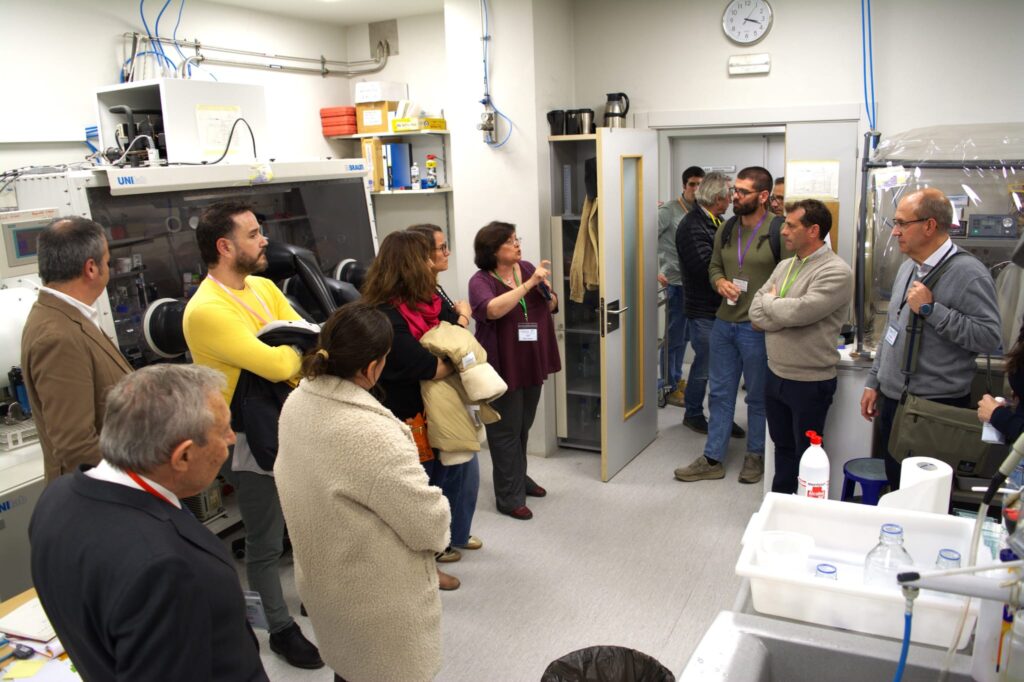
The 'CBGP Solutions'‘
Divided into three blocks – biofertilization/bionutrition; biostimulation/bioprotection and gene editing – and through 14 short presentations, the leading scientists of this Madrid center presented the portfolio of CBGP Solutions. Endophytic fungi (which live within plant tissues without causing disease) to obtain extracts for biostimulants and biopesticides that have already demonstrated efficacy in tomatoes and corn; microbiome analysis (the set of microorganisms that live in association with a plant) capable of detecting 10 times more species in the soil (both latent pathogens and beneficial species) to discover new molecular functions or enzymes through sequencing and bioinformatics methods; root engineering to improve plant growth and stem resilience with a novel device called D-Root for cultivation in vitro (which prevents light stress that alters plant responses) or a "root clock" mechanism that regulates where and when new lateral roots will form. Advances of this kind, in basic research and patent generation, have attracted one of the subsidiaries - Rovensa Next - of one of the world's most powerful multinational biosolutions companies - Rovensa - which already expected to have a turnover of more than 1 billion euros by 2025 and maintains a permanent research unit at this center.
In the area of biostimulation, advances in the analysis of bacterial infections were also detailed, focusing on how to prioritize natural compounds against these pathogens to overcome resistance to the few existing bactericides; biotechnological alternatives were proposed to improve tolerance to abiotic stress (to environmental factors such as salinity) or to convert plant defense mechanisms into crop protection tools; the use of mycoviruses (which infect fungi) that reduce the virulence of fungal diseases and have already yielded results in crops such as tomatoes or garlic was addressed, as well as stimulants to compensate for the lack of chill hours in apricot trees or to cope with drought.
Thirdly, the success story of Rocinante Lab was presented. This CBGP group specializes in crop improvement and develops models and tools based on genomics, statistics, and AI to accelerate variety creation. The presentation covered advances in understanding the molecular mechanisms of plant adaptation to different environments, as well as the epigenetic processes (those that regulate when genes are activated, silenced, and how intensely they are expressed) that govern plant development, genome organization, and key processes such as flowering. There was also an opportunity to learn about another [unclear - possibly "other"]. spin-off From CBGP, Semicom Biosolutions offers an alternative to the non-recyclable 91% plastic used in food packaging by using bioengineered microbes to break down these materials and obtain various high-value chemicals or ethanol. It was explained how accumulated knowledge about how a protein becomes an allergen has important business applications in quantifying such problems in food, as a diagnostic method, or even in producing antibodies.
Separately from the CBGP, the activity of Madeinplant, a Valencian company specializing in CRISPR improvement and involved in almost all of the few field trials of edited crops carried out in Spain, was presented, as well as the case of Ramiro Arnedo, a leading seed production firm from La Rioja, which dedicates more than 301% of its turnover to R&D and also works with edited lettuces to generate resistance genes.
See the article at
 English
  Spanish