
Spain aims to regain ground and get ahead of EU regulations on NGTs
China already holds 751,000 patents on genetically modified seeds, but the Spanish Ministry of Agriculture, Fisheries and Food (MAPA) is urging the country to regain ground and get ahead of EU regulations.
- BIOVEGEN observes how European restrictions on new gene-editing techniques (NGTs) have reversed the global leadership in plant breeding: in 2015 the EU led the way in innovation; by 2024 the Asian giant had already quintupled the number of European registrations.
- The regulation for NGTs will be approved in May but will not come into force until 2028. The Ministry of Agriculture will facilitate having “everything ready” to protect plants edited by that date and encourages the sector to also take advantage of the upcoming EU regulation, currently under consideration, on edited microorganisms.
- The assembly of this biotechnology platform, under the leadership of José Pellicer, acknowledges its spectacular growth - it was founded in 2005 with 20 members and today includes 185, many of the country's leading centers and companies - and supports the appointment of José M. Fontán as its new president
- BIOVEGEN approves an alliance with the Spanish Society of Horticultural Sciences (SECH), one of the largest agricultural scientific societies in the country, made up of more than 450 researchers
Madrid, April 23, 2026. The 75% patents on genetically edited seeds are from China. The European Union (EU) restrictions on the development of NGTs are still in place today (New Genomic Techniques, These factors (UPOV) have most likely been decisive in the shift in the balance of power and innovation in plant breeding over less than a decade. As far back as 2014, the EU led the rankings with 3,464 plant protection applications registered with UPOV (International Union for the Protection of New Varieties of Plants), while China was second (2,125) and the US third (1,588). By 2024, the Asian giant had already taken the lead with a figure five times higher than the European average (16,177 compared to 3,268 applications from the EU and 1,268 from the US). These telling figures were released last week during the general assembly of BIOVEGEN, the science-business platform for promoting agricultural biotechnology. It was Manuel Lainez, director of innovation and agri-food development at the Cajamar Group Foundation, who, analyzing the geopolitical situation in the West, predicted a hopeful shift in European strategy: “The post-Ukraine and post-COVID world has shown that food chains are vulnerable. Until recently, only energy sovereignty was considered strategic by Brussels. Today, it is clear that food also plays a role, and plant biotechnology is no longer just science. It is geostrategy.”.
Important steps have been taken in recent days to make this a reality. On April 21, the Council of Europe adopted its final position on the future regulation of NGTs, and in May, the European Parliament will approve it in its second reading, meaning the regulation could be published in the Official Journal of the European Union (OJEU) during the second half of this year. However, as Ana Judith Martín, representative of the Ministry of Agriculture (MAPA) and secretary of the Interministerial Council for Genetically Modified Organisms (CIOMG), immediately pointed out, the regulation for plants improved by methods such as CRISPR will not be in force until 2028. Aware of the already vibrant activity in the field of gene editing, Martín encouraged the Spanish companies and research centers that responded to the BIOVEGEN call for proposals to get ahead of this date and begin the preparatory work for registering their varieties. “The Ministry of Agriculture, Fisheries and Food (MAPA) will provide support so that companies can have everything ready to protect their varieties when the directive comes into effect in 2028. Even at the field trial level, we are quick to grant authorizations, and conducting them under the current directive (on Genetically Modified Organisms, GMOs) does not mean that the variety will not later be registered as NGT-1,” he clarified.
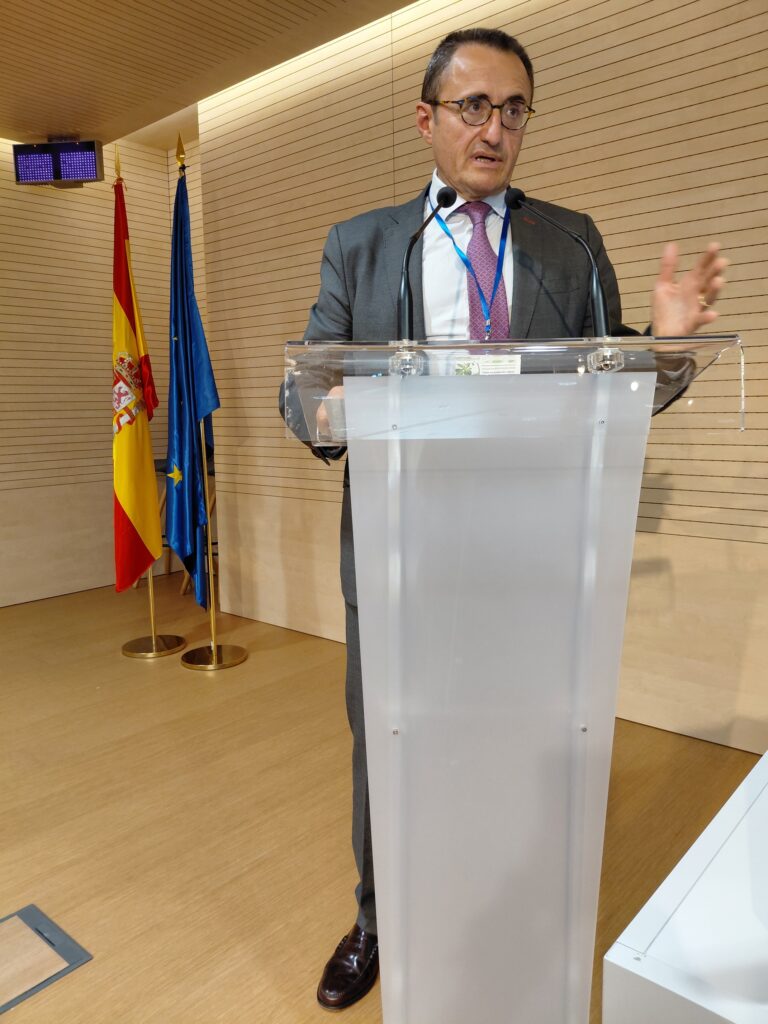
Martín used the nomenclature (NGT-1) employed in the historic compromise text agreed by the Council of Europe in December, which concluded the slow EU legislative process. She herself played a leading role in its inception—coinciding with Spain's EU presidency in 2023—as a representative of the Spanish Ministry of Agriculture, Fisheries and Food (MAPA). However, it was Concepción Novillo, Director of Regulatory Policies for Seeds and Biotechnology at Bayer Crop Science, who went into detail about this new regulation and the stages that still need to be completed. And indeed, plants that are classified as NGT-1 will benefit from greater flexibility and speed in processing protection applications because they will be exempt from the complex risk assessment process specific to the current directive (from 2001) for Genetically Modified Organisms (GMOs, that is, those that introduce foreign DNA into their genome). “Varieties developed by the latest breeding methods should not be regulated differently if they are similar and indistinguishable from those that could have been obtained by previous breeding methods,” the expert noted in this regard. This has been the guiding principle that launched the global race to regulate gene editing, in which Europe is so far behind. The list of those that have overtaken it is long: Argentina first, but also Canada, the US, Colombia, Ecuador, Brazil, Paraguay, Chile, Uruguay, Peru, Japan, Australia, and India, and even, in Europe and after Brexit, the UK, as well as African countries such as Nigeria, Ghana, and Kenya. According to Novillo, all of these countries, in their regulations, have addressed the specific nature of these techniques and created their own regulations for NGT plants, distinct from those for GMOs. China, on the other hand, considered these plants to be transgenic but, in practice, approved a simplified process for authorizing them. In its proposal, the EU distinguishes between plants obtained through gene editing, specifically NGT-1 and NGT-2, whose processing is based on GMO regulations regarding stringent requirements for risk assessment, traceability, and mandatory labeling. The difference between NGT-1 (flexible) and NGT-2 (treated similarly to GMOs) will hinge on a criterion that the scientific community questions: it will depend on whether or not more than 20 genetic modifications are made in the edited plant.
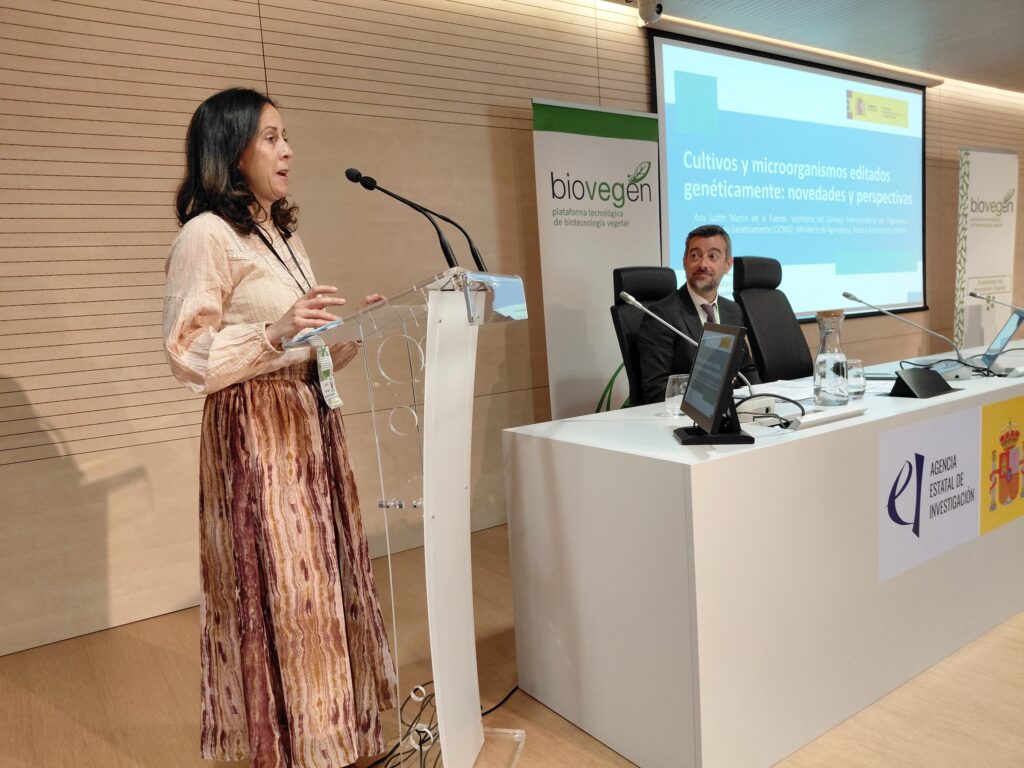
On the horizon, and as a result of this shift in European strategy, further developments are emerging that will revitalize agricultural biotechnology: the reform of the fertilizer regulation—which will recognize new biofertilizers and bionutrition—is well underway; work is progressing on the Omnibus Food Simplification Package, which will differentiate between biostimulants and plant protection products (chemicals) and expedite the registration of biopesticides; and there will also be changes to the regulation of plant reproductive material (from nurseries). This package also includes provisions to provide legal certainty for products (enzymes, additives, flavorings, novel foods) resulting from precision fermentation with genetically modified microorganisms (GMMs). The representative from the Ministry of Agriculture, Fisheries and Food (MAPA) addressed all of this, focusing on another initiative, known as the 'Biotech Act,' which is related to the simplification efforts of the aforementioned Omnibus Package. Martín reported specifically on the start of the reform process for the legislation applicable to the marketing of the aforementioned GMOs—currently also regulated by the same GMO directive. Thus, in line with the proposal for plant breeding, the new text—as he explained—will allow for ‘greater adaptation to their specific characteristics of the information requirements and risk assessment, detection and identification, and will create a category of 'low-risk GMOs' that can be subject to a faster authorization procedure and, if justified, will not have to implement environmental monitoring plans.’.
Pellicer, the creator of BIOVEGEN
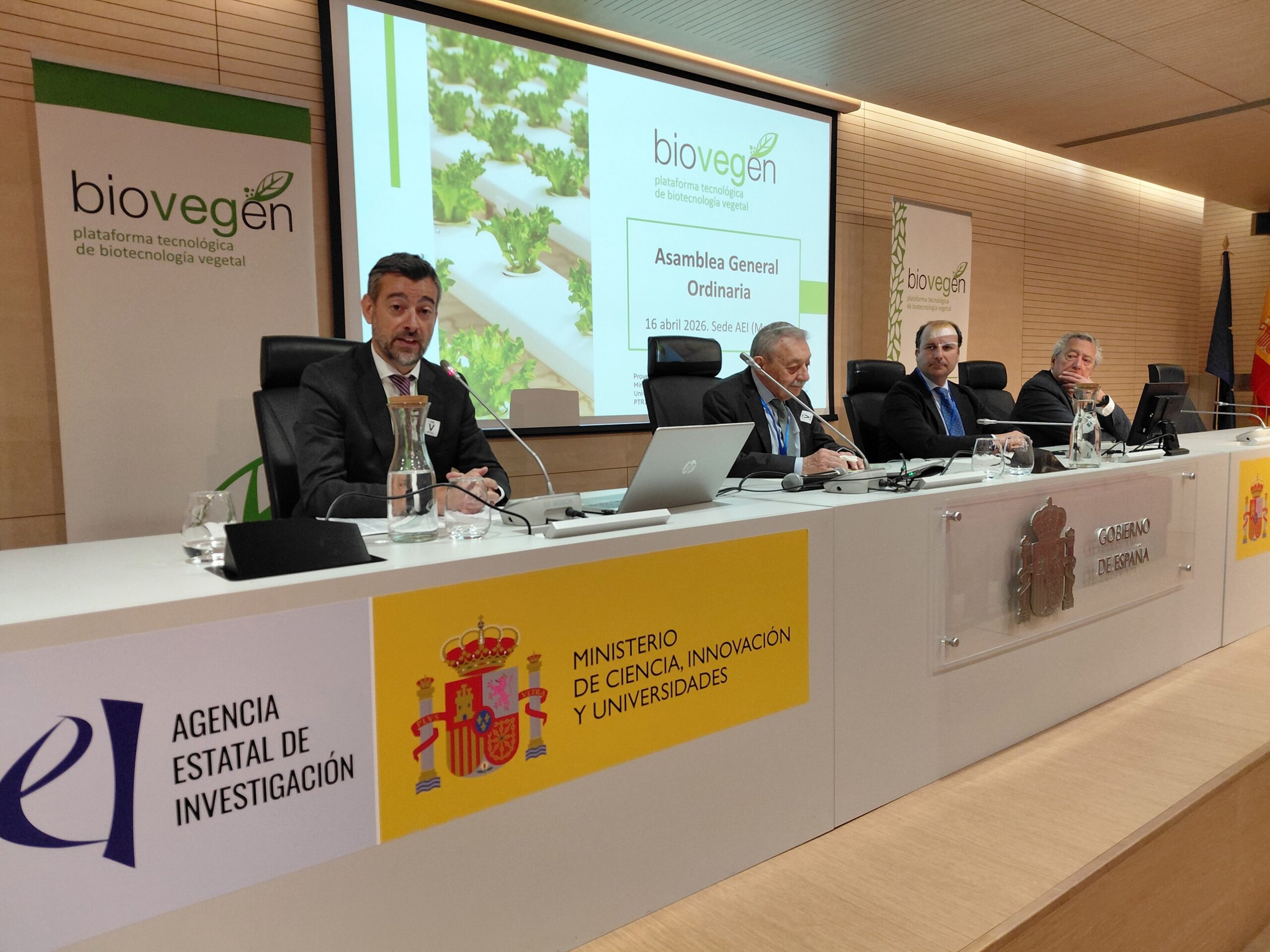
Held at the headquarters of the State Research Agency (AEI) in Madrid, the general assembly, where all these new developments were presented, served to review José Pellicer's leadership as president during BIOVEGEN's more than two decades of history. As its director, Gonzaga Ruiz de Gauna, recalled, “We were founded in 2005 to replicate the structure that France and Germany already had in place to facilitate the transfer of biotechnology to agriculture. At that time, we were 15 companies and 5 research centers. Today, BIOVEGEN comprises 185 members, and the results, in terms of project development, validate Pellicer's track record.” Having acknowledged this, the assembly confirmed the appointment of José María Fontán, also linked to the Spanish company Eurosemillas, as the platform's new president.
The BIOVEGEN assembly also ratified, with the participation of the president of the Spanish Society of Horticultural Sciences (SECH), Francisco José Arenas, a new alliance signed by both entities. The agreement with one of the largest agricultural scientific societies in the country, comprised of more than 450 researchers, will allow for collaboration in organizing meetings, congresses, and workshops on agricultural biotechnology, disseminating information about them, and implementing research projects in this field.
See the article at
- FruitToday
- Agronews Comunitat Valenciana
- Valencia Fruits
- Fruit Portal
- AgroDiario Huelva
- Markets Magazine
Program and presentations
9:30 a.m. BIOVEGEN General Assembly (HYBRID session. Exclusive for BIOVEGEN members)
11:30 a.m. Coffee Networking
12:00 h. BIOVEGEN Session "Towards precise, efficient and sustainable plant production"« (PRESENTIAL Session. Open to the entire sector. Priority assistance for BIOVEGEN partners)
- State Investigation Agency (AEI). José Manuel Fernández de Labastida. Managing Director
- BIOVEGEN. José Pellicer. President
12:15 h. Agri-food, biotechnology and geopolitics
- Manuel Lainez. Director of Innovation and Agri-food Development. Cajamar Group Foundation
12:35 h. Genetically edited crops and microorganisms: new developments and perspectives
- Ana Judith Martín de la Fuente. Secretary of the Interministerial Council on Genetically Modified Organisms (CIOMG). Ministry of Agriculture, Fisheries and Food (MAPA)
- Concepción Novillo. Director for Regulatory Policies for Seeds and Biotechnology in Europe. Bayer CropScience.
13:15 h. CONVERGE CSIC Program: Science at the service of society's challenges
- Ana Castro. Vice President for Innovation and Transfer. CSIC
13:35 h. TRL BOOST Program: Innovative Biocides for Plant Health
- Azucena González. Research Professor. Institute of Agricultural Sciences (ICA-CSIC)
13:45 h. Spanish Society of Horticultural Sciences and BIOVEGEN: alliance for science-business innovation
- Francisco José Arenas. IFAPA and President of SECH
- Gonzaga Ruiz de Gauna. BIOVEGEN Director
2:00 p.m. Conclusions and closing
- José Moisés Martín. Director General. CDTI
Cocktail networking
 English
  Spanish