


- Spanish companies like Ploid AI are reducing time in the acquisition process using New Genomic Techniques (NGT’s) or conventional improvement thanks to bioinformatics and AI systems. Remo Varieties and La Canastita will testify to how they have accelerated their fruit programs
- This year, the XI edition of Biotech Attraction, under the aegis of Innova&Tech (in Pavilion 5) and also promoted by BIOVEGEN, features 17 biotechnology companies and research centers. During the first two days of the fair, 8 agro projects and solutions will be presented, and 150 science-business meetings have already been confirmed, more than double compared to 2025
- The XVIII edition of Fruit Attraction is the first following the approval of the European regulation for NGT’s, and a certain euphoria can be detected at the congress promoted by Biovegen: more than 500 researchers, technicians, and entrepreneurs have pre-registered, and the Fruit Forum could be filled
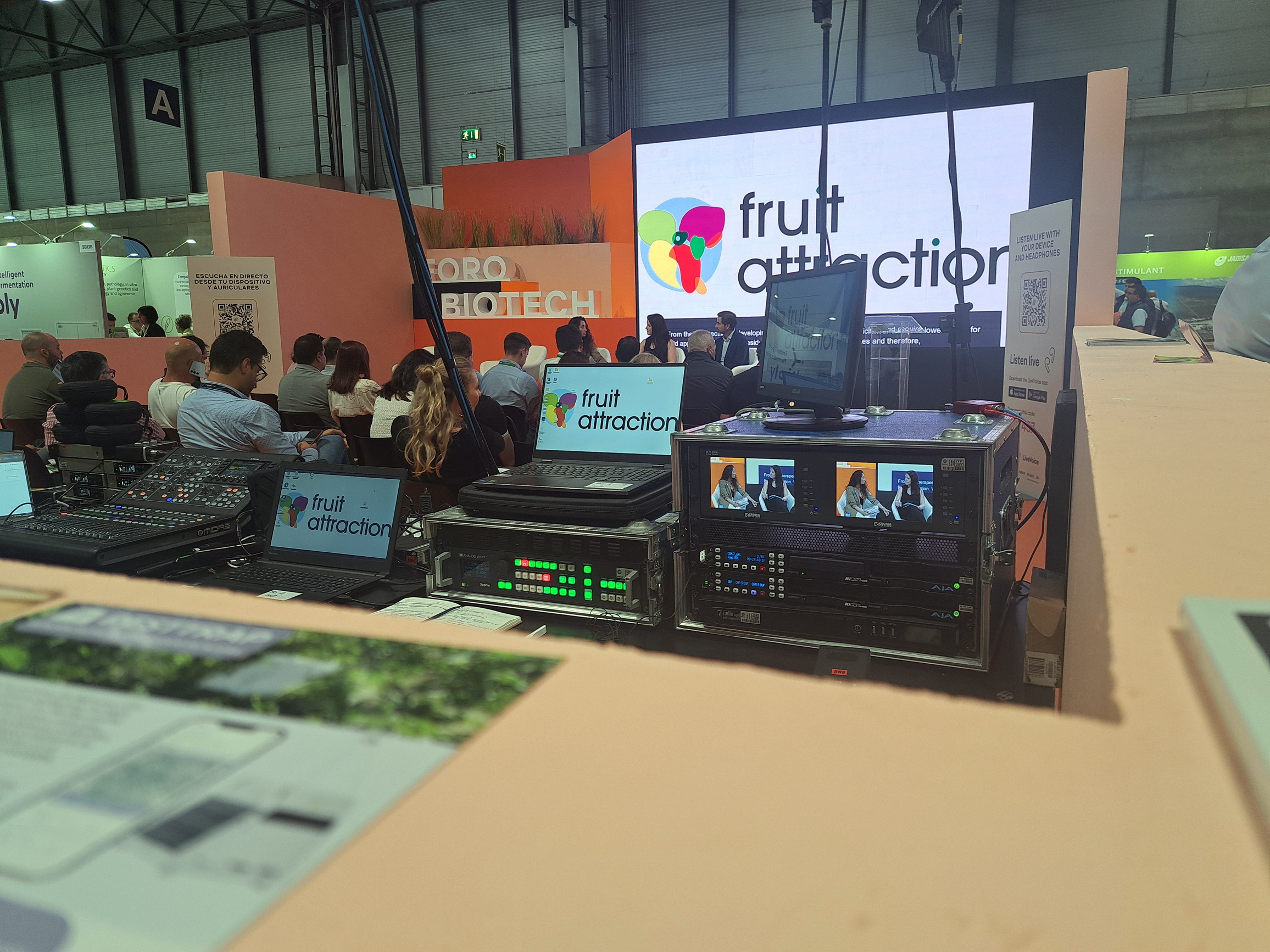
The XVIII edition of Fruit Attraction (IFEMA, from October 6 to 8) will be the first meeting after the publication in the DOUE of the new European regulation to regulate New Genomic Techniques (NGT’s). And BIOVEGEN, the public-private biotechnology platform dedicated to promoting the materialization of R&D projects, can testify to how this sector is undergoing significant changes. The major trade fair to get updated on this – the Biotech Attraction Congress, which will take place on the morning of October 7 – already has more than 500 representatives from companies, centers, researchers, and individual technicians who have requested to attend, and it is likely that the Fruit Forum where it will be held will be too small. This time, the meeting will have a strong focus on a service that is emerging strongly in parallel with the development of genetic editing systems for plants: how artificial intelligence (AI) is capable of reducing time and ‘blind’ decisions in laboratories, how its involvement allows for earlier identification of the parental lines that need to be crossed, the genes, alleles, and molecular markers that need to be activated/deactivated or inserted for improvement through conventional systems or the now-popular CRISPR to succeed. And there is already an embryonic ecosystem of specialized companies assisting breeders.
Earlier, we spoke of expectations, of an emerging technology that would pave the way for improving and stabilizing crops. Today, after the approval of the European regulation for NGT’s, we can now describe a technological race, we can refer to a multitude of multimillion-dollar investment projects in which research centers, the Spanish biotechnology ecosystem – with powerful interested horticultural operators – have much to say,” values José María Fontán, president of BIOVEGEN.
This is the case of a Catalan company that is on its way to securing a prominent place as an assistant in improvement projects by NGT’s or through conventional crossings. During the meeting, the CEO and co-founder of Ploid AI, Federico Jurado, will explain how bioinformatics and the development of specific AI algorithms can compress decision-making cycles for the breeder: it allows for the earlier identification of suitable individuals (parents), discarding material before taking it to the field for years of trials, and selecting genetic modifications with a higher probability of success. Following this, two companies that have successfully implemented the management of these omic data (which are the vast sets of biological information of interest for a plant) through such processes to incorporate them into their improvement programs will provide testimonials. Then it will be the turn of the representatives of “La Canastita” – a brand linked to Agrícola el Bosque – which works and continues to work successfully on new varieties of blackberry or Berryum and Remo Varieties, which focus on raspberries and other red fruits.
Next, it will be the turn of other biotechnological disciplines and specialized centers that will be able to present their advances and research models. The IRNAS-CSIC (Sevilla) is clearly oriented towards agrobiology, and its lines cover seed biotechnology, plant physiological and ionic regulation, sustainable use of the soil-plant system, microbiology, plant biomass, and sustainable agriculture. AINIA (in Paterna, Valencia), on the other hand, has a much more technological and industrial profile and has developed methodologies to select microorganisms with bio-stimulating or nematicidal capacities; it also works in microbial biofactories to produce molecules of agricultural interest. Lastly, the MEDINA Foundation (Granada) has an extraordinary asset: it has about 190,000 microbial strains and a large library of extracts/natural products, and from these, it seeks molecules, microorganisms, and enzymes for health, industry, and agriculture.
Regarding technological transfer – which is the activity that BIOVEGEN focuses on – the results of two projects in which this platform participates, mediates, and promotes will be explained: GO PISTABIOTECH (to biotechnologically valorize the byproducts of pistachio, mainly pods, shells, and peeling water) and GO VINEURO (which aims to improve sustainability and differentiation of wines through ecosystem practices in the vineyard, especially the use of aromatic and medicinal plants).
Biotech Attraction and the Fruit Forum
The mentioned congress is their biggest showcase, but Biovegen’s commitment to bringing plant innovation to the primary sector extends with the organization of a fair -Biotech Attraction- which is now in its eleventh edition and takes place under the umbrella of Innova&Tech (in Pavilion 5). This year, up to 17 companies and research centers will participate as exhibitors at Biotech Attraction. Entities -most of them associated with BIOVEGEN- will also have the opportunity to present their projects in the so-called Biotech Forum -inside this fair space- where 8 agro projects and solutions will be defended. Proof of the high expectations raised this edition is the science-business meetings that this biotechnology platform also facilitates: last year, 71 of them were arranged, while in 2026, more than double, 150, have been confirmed.